
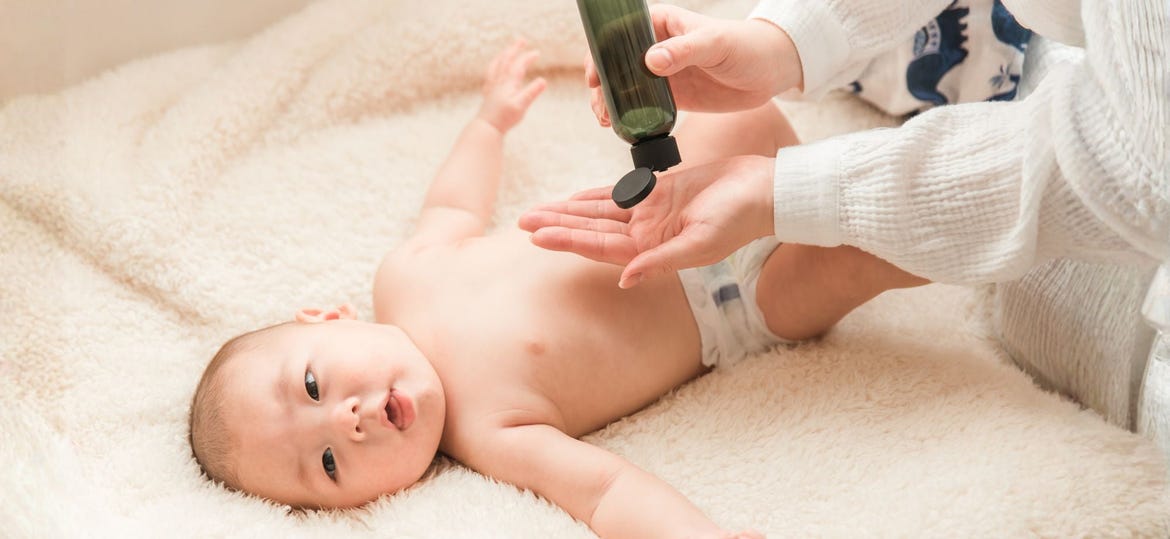
Toxic-free & Natural Baby Care Products
Gentle protection for delicate baby skin
The golden rule: as little as possible, as much as necessary
When it comes to baby care, a simple principle often applies: ‘Less is more’. A newborn’s delicate skin is much thinner than our own, and its natural barrier needs time to develop properly during the first few months. For this reason, there is usually no need for a complicated routine with numerous products. The quality of the ingredients is far more important.
What to look out for:
- Free from mineral oils: Substances such as paraffins form a film on the skin and can prevent it from ‘breathing’.
- No synthetic fragrances: Babies naturally have a pleasant scent. Artificial fragrances may unnecessarily irritate both the airways and the skin.
- No harsh preservatives: Substances such as parabens are not suitable for baby care.
Plant oils – the all-rounders of baby care
A high-quality, toxin-free plant oil, such as almond oil or organic olive oil, is often the only product you really need. It is extremely versatile.
- For cleansing: A few drops on a flannel help to gently cleanse the nappy area.
- As a bath additive: A small amount of oil in warm water helps to protect the skin from drying out.
- For baby massage: It promotes a sense of closeness while nourishing the skin.
A quick aside: gently removing cradle cap
You may notice yellowish, greasy flakes on your baby’s scalp. There is no need for concern, as this is usually cradle cap. It is harmless and primarily a cosmetic issue.
How to treat it: In the evening, apply a generous amount of natural baby oil to the affected areas and leave it on overnight, optionally covered with a thin cotton bonnet. The following morning, the softened flakes can be gently removed using a soft baby brush or a damp cloth. Avoid scratching with your fingernails, as the scalp is very sensitive.
❤️ Our experts’ tips ❤️
- If you are choosing baby care products, look for certified natural cosmetics and ingredients free from harmful substances.
- For gentle cleansing, washable cleansing pads or soft organic cotton washcloths are an alternative to single-use wet wipes.
- A soft baby brush made from natural bristles is ideal for daily care and for gently removing softened cradle cap.
Frequently asked questions about toxin-free skincare
Do I need to apply cream to my baby after every bath?
Not necessarily. If your baby’s skin looks healthy and well-balanced, additional lotion is often not required. Excessive moisturising can reduce the skin’s ability to regulate itself. If you notice dryness on the legs or arms, a gentle massage with a few drops of oil is usually sufficient. Lotions are mainly needed when the skin requires moisture that oil alone cannot provide.
What is the difference between cradle cap and milk crust?
These are often confused. Cradle cap usually appears within the first few weeks of life. It tends to be greasy, may have a slight sebum scent and does not cause itching. It is harmless. Milk crust, on the other hand, typically appears later, from around the third month. It is drier, often reddish and usually accompanied by itching. If your baby is scratching or seems unsettled, it is advisable to consult a paediatrician, as milk crust can be an early sign of atopic dermatitis.
Are essential oils suitable for baby care?
Caution is recommended. Many essential oils are too strong for babies and may even cause breathing difficulties. If used at all, only very small amounts of oils specifically approved for babies should be considered. During the first few months, it is safest to avoid fragrances altogether so that your baby can recognise your natural scent.
Why is mineral oil problematic in baby care products?
Mineral oils, often listed as Paraffinum Liquidum, are derived from crude oil. Although they are inexpensive and have a long shelf life, they do not provide active skincare benefits. They create a sealing layer on the skin, which can hinder the development of its natural protective function. Natural plant oils, by contrast, are absorbed and actively support the skin.
What is the best way to store baby oils so that they do not go rancid?
As natural, toxin-free products usually contain fewer preservatives, they are more sensitive. Store oils and lotions in a dark place at room temperature and avoid direct sunlight. Ensure that no water enters the bottle. If an oil develops an unusual or rancid smell, it should be replaced.
Related products
-
Eliah Sahil Organic Almond Baby Oil, 100 ml
- Ideal for gentle massages
- Suitable as a bath additive
- Cold-pressed
-
Cose della Natura Washed Fine Silk Sponge, Large, 12-14 g
- Super soft
- Ideal for babies
- Luxurious face experience
-
Pilogen Carezza Bio Bio Baby Chamomile Bath/Shampoo, 500 ml
- Nourishing & protective
- Moisturises
- Free from allergenic ingredients
-
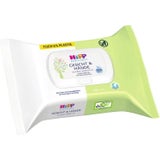
HiPP Baby Soft Face & Hands Cleansing Wipes, 20 pieces
- For sensitive skin
- Ideal for on-the-go use
- Perfume-free & pH-neutral
Magazine Articles:
Discover Babymondino:
-
Ireland: Free standard delivery from € 87,90
-
Free
returns Secure payments
with SSL encryption technology